

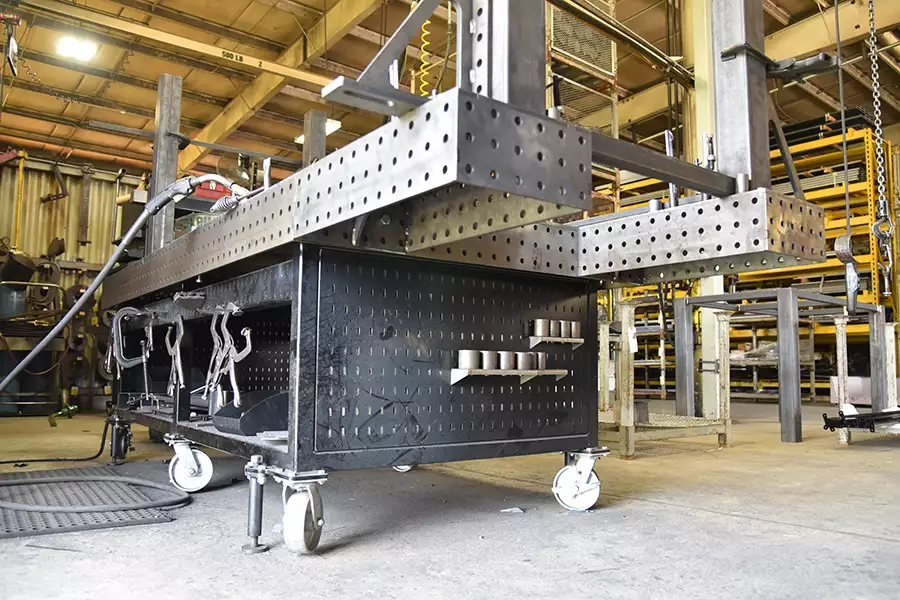
Fixture blocks are modular welding table components that increase flexibility by extending the work surface, connecting tables, or raising parts for better positioning. For fabrication shops handling varied part sizes, changing setups, or cobot-assisted work, they offer a practical way to expand capability without committing to a permanently larger table.
As fabrication shops handle more part variation and shorter production runs, welding table flexibility has become increasingly important. As a result, fixture blocks help modular welding tables adapt to changing jobs while maintaining repeatability, access, and efficient use of floor space.
What Is a Fixture Block?
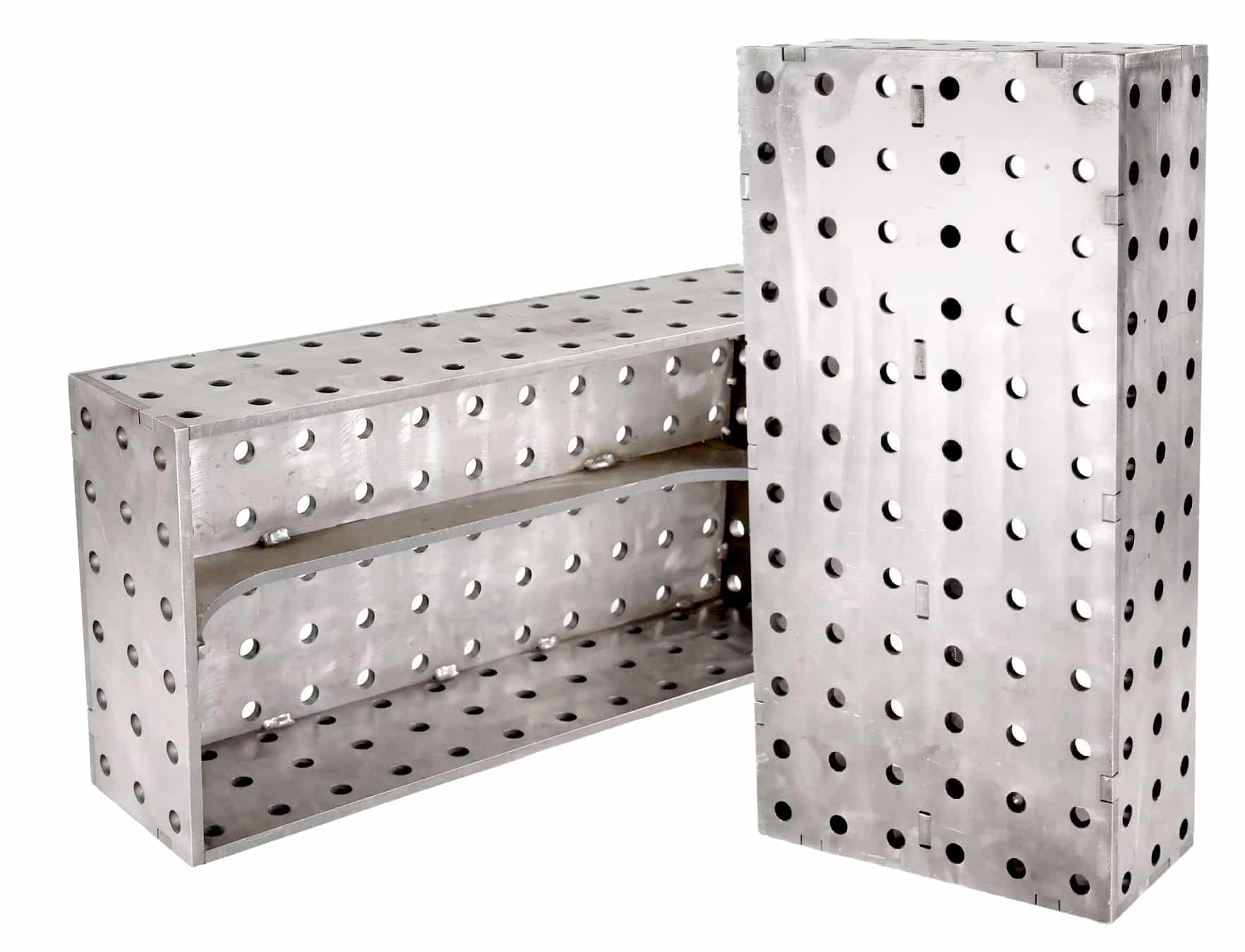
Fixture Blocks, sometimes called fab blocks, extension blocks, or modular fixturing blocks, attach to a welding table to expand the work surface and add targeted support where you need it.
They use the same grid pattern and fixturing system, so users can build flexible setups without permanently changing the table itself.
A fixture block is a modular component that:
- Bolts directly onto a welding table
- Uses the same grid and fixturing system
- Acts as an extension of the table surface
Unlike a fixed table size, fixture blocks can be added, moved, and removed as production needs change. Because of that, they work well in high-mix environments, short runs, and applications where part size, fixturing needs, or access requirements vary from job to job.
What Can Fixture Blocks Be Used For?
Fixture blocks extend and adapt the usable surface of a modular welding table while staying aligned with the table’s fixturing system. In practice, that means shops can add support only where they need it instead of sizing every setup around the largest possible part.
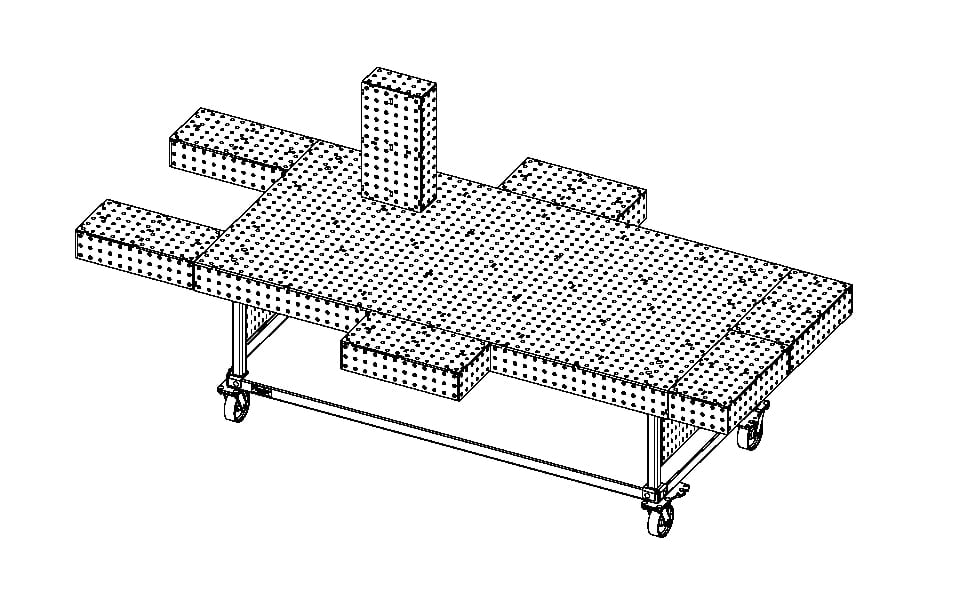
They are used in three primary ways:
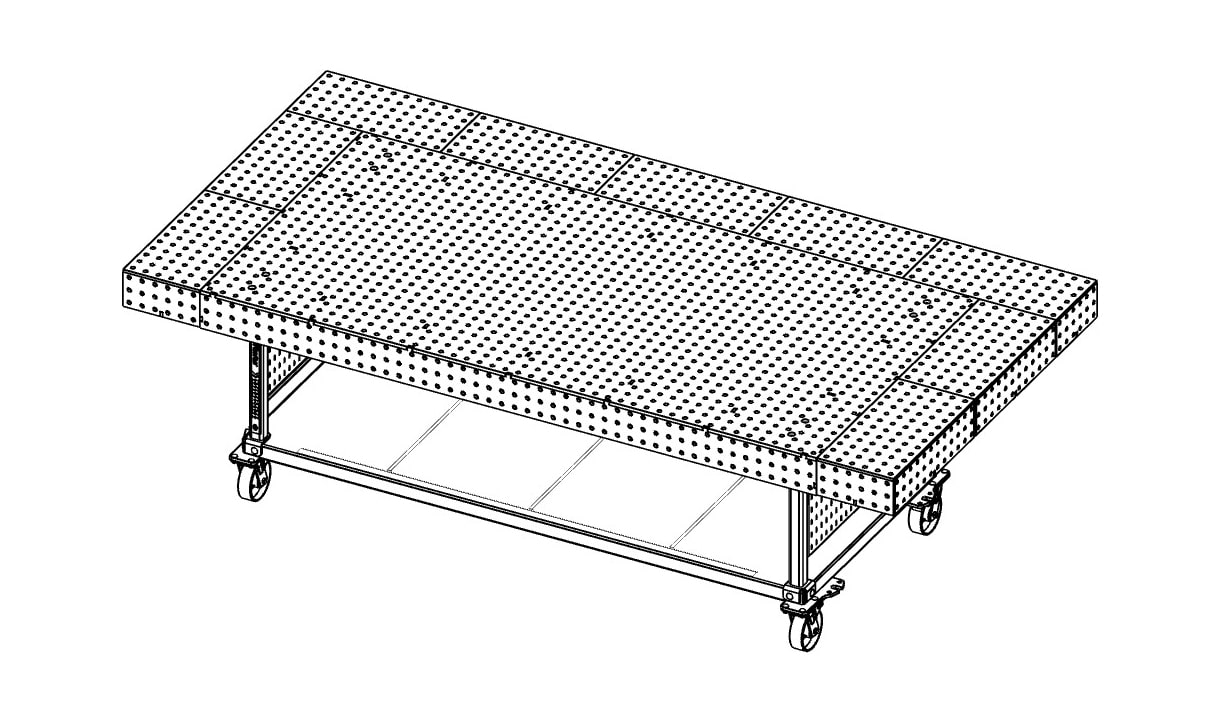
1. Extend the Surface of a Welding Table
Fixture blocks can be added to the edge of a table to:
- Increase table length or width
- Support larger weldments
- Create expandable work areas when needed
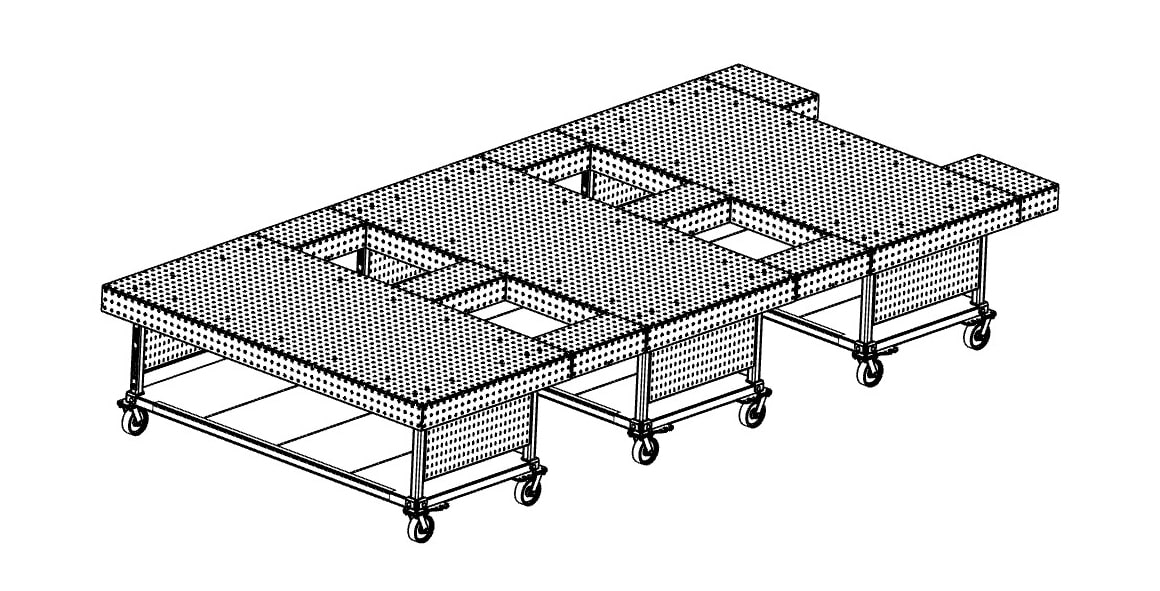
2. Connect Multiple Tables Together
Fixture blocks can also be used to:
- Align and secure multiple tables
- Create a larger continuous workspace
- Maintain spacing between tables for better welder access
3. Raise and Position Parts (Vertical Use)
Fixture blocks can be used vertically to:
- Raise parts to a more comfortable working height
- Elevate fixtures or clamps
- Improve access for welding and positioning
In short, fixture blocks can expand a single table, connect multiple tables, or raise parts for better access, depending on what the application requires.
What Are the Benefits of Fixture Blocks?
1. Support Where It's Needed
Most parts do not require the full surface of a large welding table. Fixture blocks allow you to add support only at key points, which helps improve part stability, preserve access, and reduce wasted workspace.
- Add support only at key points
- Improve part stability
- Reduce unused workspace
2. Improve Workflow Efficiency
Because teams can add or reposition modular welding table accessories quickly, shops spend less time building workarounds or reconfiguring around fixed table limitations. As a result, they can move from one setup to the next with less disruption.
- Custom fixtures
- Workarounds
- Rebuilding setups
3. Works Well with Cobot Applications
To keep parts within a cobot’s working envelope, shops need consistent reach and repeatability. Fixture blocks help them keep a smaller base table within reach while adding support only where the part requires it.
- A compact base table for reach
- Controlled expansion only where needed
Fixture Blocks vs. Larger Fixed Tables
Both approaches have value. In general, fixture blocks are better when flexibility and space efficiency matter, while a larger fixed table may make more sense for consistently large weldments or permanent layouts.
| Consideration | Fixture Blocks | Fixed Tables |
|---|---|---|
| Large Work Surface | Expand When Needed | Always Available |
| Workflow Adaptability | Adjust Per Job | |
| Flexibility | Multiple Configurations | |
| Expansion Options | Extend, Connect, or Raise |
When Should You Use Fixture Blocks?
In many cases, fixture blocks are a strong fit for shops that run varied part sizes, change setups often, or want more flexibility from a modular welding table without adding unnecessary footprint.
- You run a variety of part sizes
- Space efficiency matters
- You don’t want multiple table sizes
- You need flexibility between jobs
- You use cobots or automation
Fixture blocks are more than an accessory. In fact, they are a practical way to make a welding table more flexible, more space-efficient, and easier to adapt across changing jobs. As a result, they let the table adapt to the job, support better positioning, use workspace more effciently, and speed up setup changes across a wide range of parts and applications.
If you have a part, weldment, or cobot application in mind, we can help you evaluate whether fixture blocks are the right fit for your setup.