
Custom Fixtures for Robotic Headstock-Tailstock Welding Cells
Manufacturers often turn to robotic headstock–tailstock welding cells to automate the welding of long, round, or rotational parts. While these systems are great for providing steady rotation, repeatability, and efficiency, they are rarely a complete solution on their own.
Most suppliers offer headstock–tailstock welding systems as rotation units only. They do not include the fixture base plate that mounts between the headstock and tailstock, or the fixture that accurately positions the part. That missing piece plays a critical role in robotic welding performance.
Without properly designed fixturing, manufacturers can experience alignment issues, inconsistent weld quality, longer setup times, and reduced repeatability.
That's where Flextur comes in, we design and manufacture custom headstock–tailstock welding fixtures, with or without fixture base plates, depending on the customer’s needs and internal capabilities.
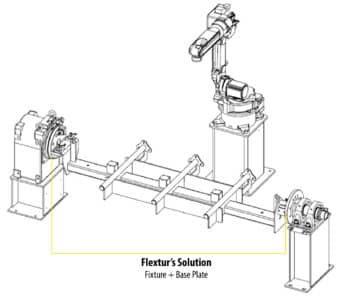
Why Headstock-Tailstock Welding Cells Require Custom Fixturing
A robotic headstock–tailstock system is designed to rotate a part. It is not designed to locate, clamp, or support that part for welding.
The fixture positioned between the headstock and tailstock does the following:
- Accurately positions the part
- Maintains alignment throughout rotation
- Supports standardization and repeatability
- Guarantees robotic torch can access weld locations
- Ensures repeatable positioning from part to part
Because every weldment has unique geometry, weight, and weld access requirements, there is no universal or off‑the‑shelf fixture that works across applications. Therefore, custom fixturing is essential in headstock–tailstock robotic welding.
Fixture Base Plate vs. Welding Fixture: What's the Difference?
In a headstock–tailstock robotic welding cell, the terms fixture base plate and fixture are often used interchangeably. However, they serve different purposes.
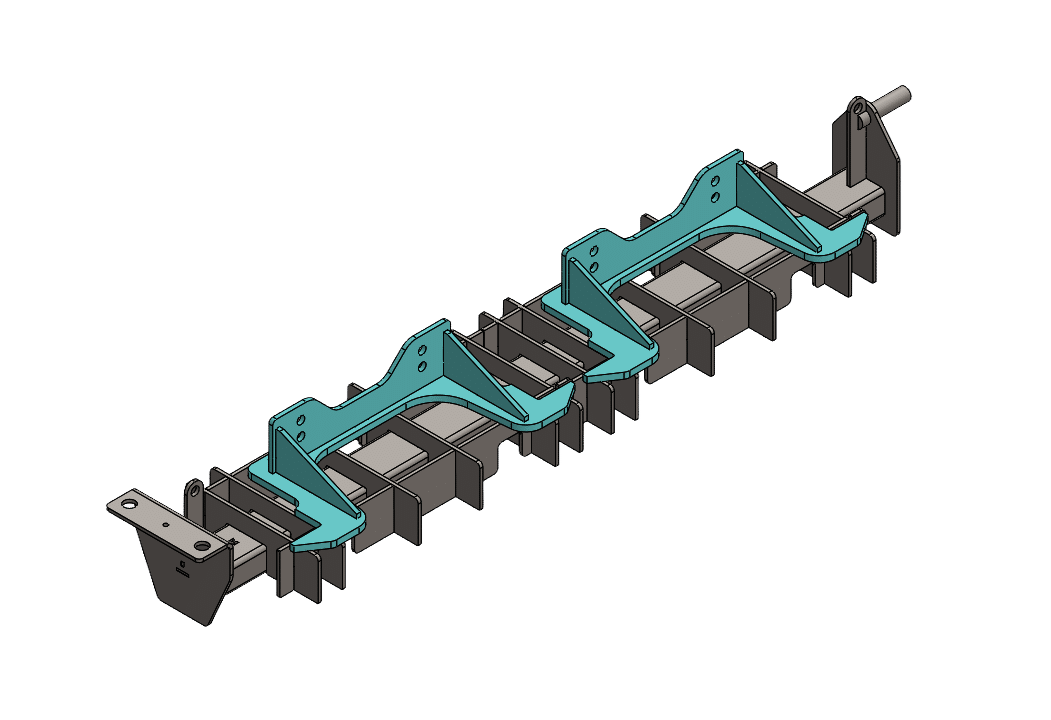
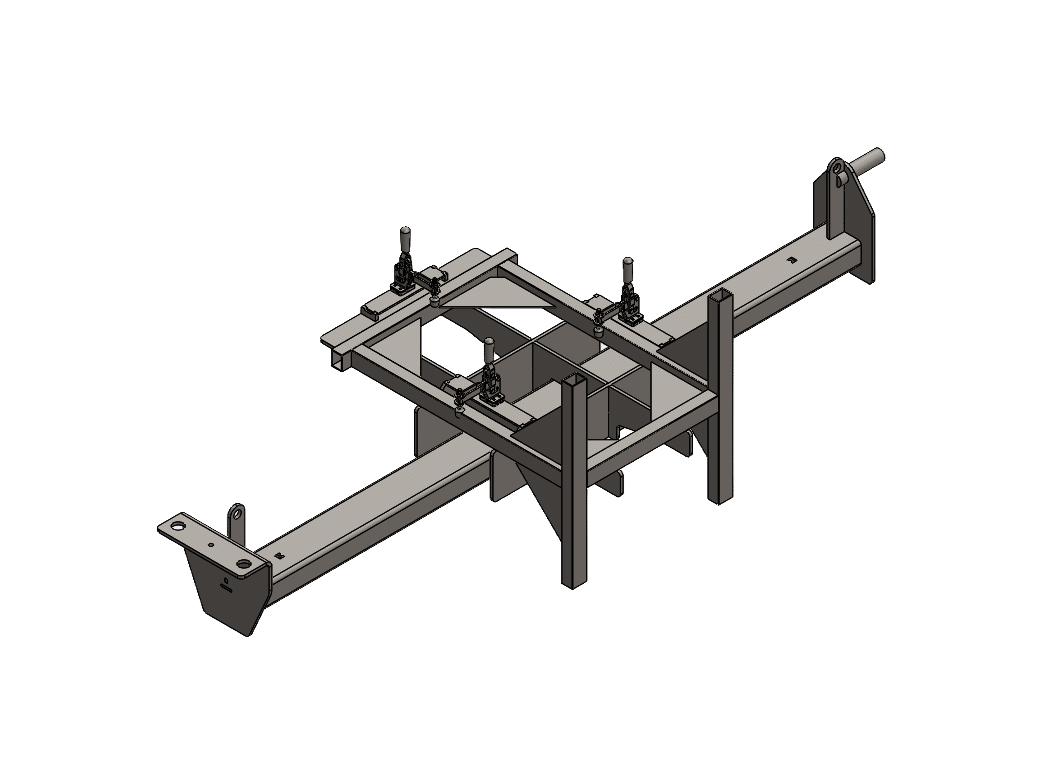
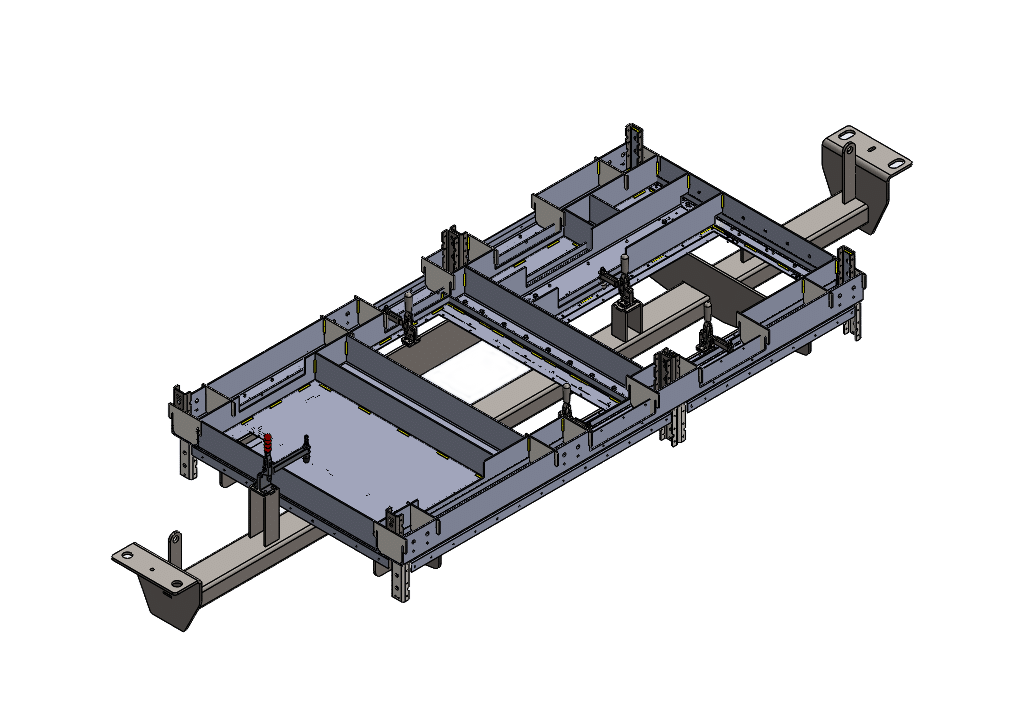
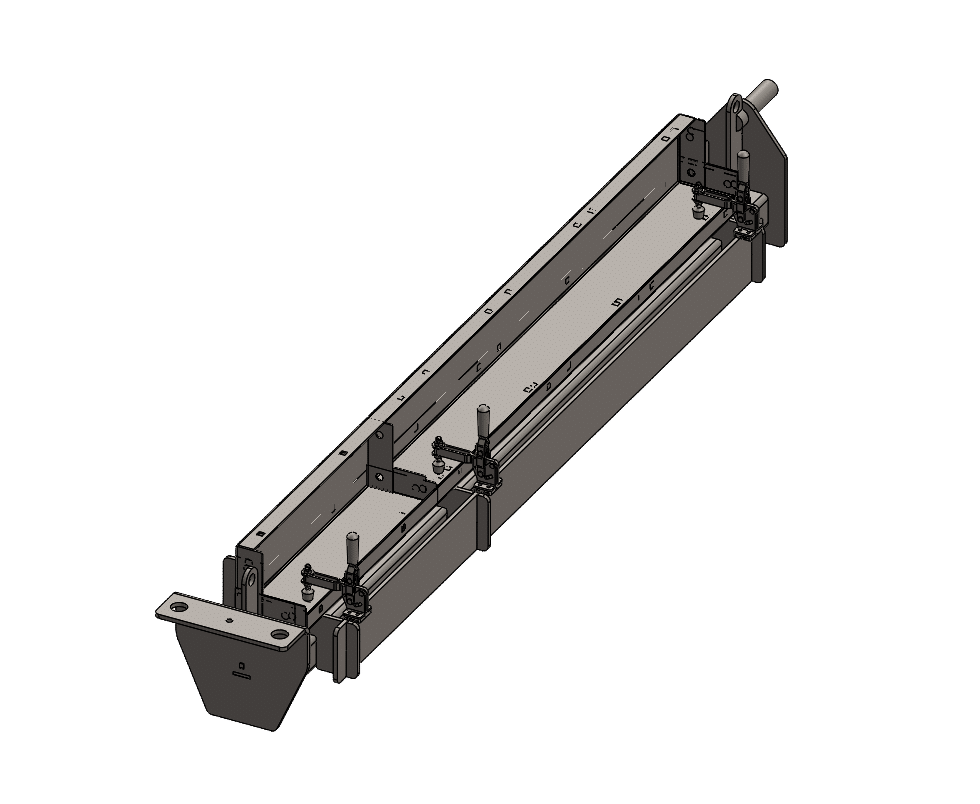
The fixture base plate spans between the headstock and tailstock and provides a mounting platform. Some manufacturers design and fabricate this plate themselves.
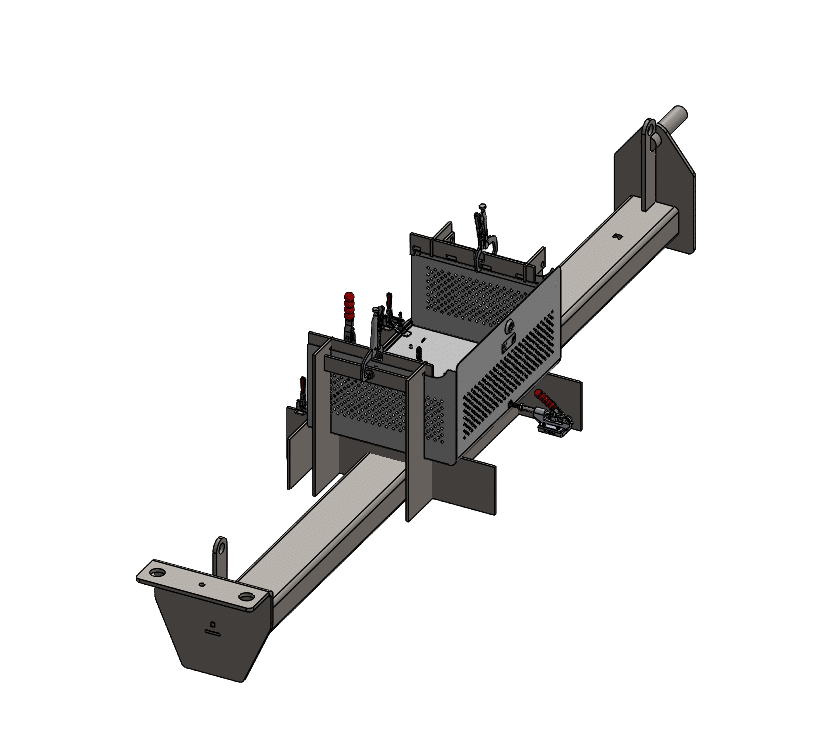
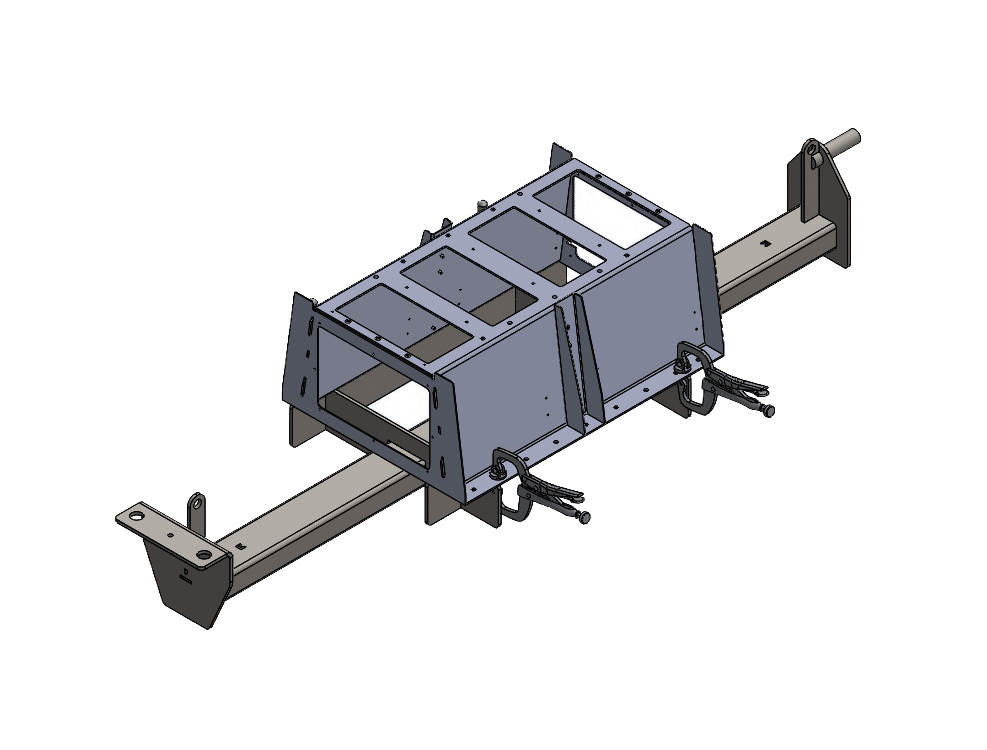
The welding fixture mounts to the base plate and accurately positions, supports, and clamps the part. It maintains alignment, repeatability, and accuracy during rotation.
Even when a manufacturer builds the fixture base plate in‑house, the welding fixture still demands specialized design expertise to meet robotic welding tolerances and production requirements.
The Challenges of Off-the-Shelf or Improvised Fixtures
Some manufacturers purchase a headstock–tailstock system and attempt to adapt generic tooling or build fixtures after the cell is installed. This approach often leads to:
- Poor part alignment
- Limited weld access
- Excessive manual adjustment
- Increased cycle time
- Inconsistent weld quality
Ultimately, in robotic welding applications, fixturing is not an accessory, it is a core component of the automation strategy.
Flextur's Simplistic Approach to Headstock-Tailstock Welding Fixtures
Flextur supports headstock–tailstock welding cells in multiple ways, depending on the customer’s needs and internal capabilities.
First, if you build your own fixture base plate, Flextur designs and manufactures the custom welding fixture that mounts to it and positions the part accurately for robotic welding.
Alternatively, if you want a turnkey solution, Flextur designs the fixture base plate and the welding fixture and integrates them with your selected headstock–tailstock system.
Either way, the goal is the same: a simple fixture solution that delivers consistent alignment, repeatability, and weld quality in production.
Completing the Robotic Welding Cell
If your application requires a custom solution for robotic headstock–tailstock welding, Flextur is equipped to support your project whether you need fixture design only or a fully engineered fixture base plate and fixture solution.