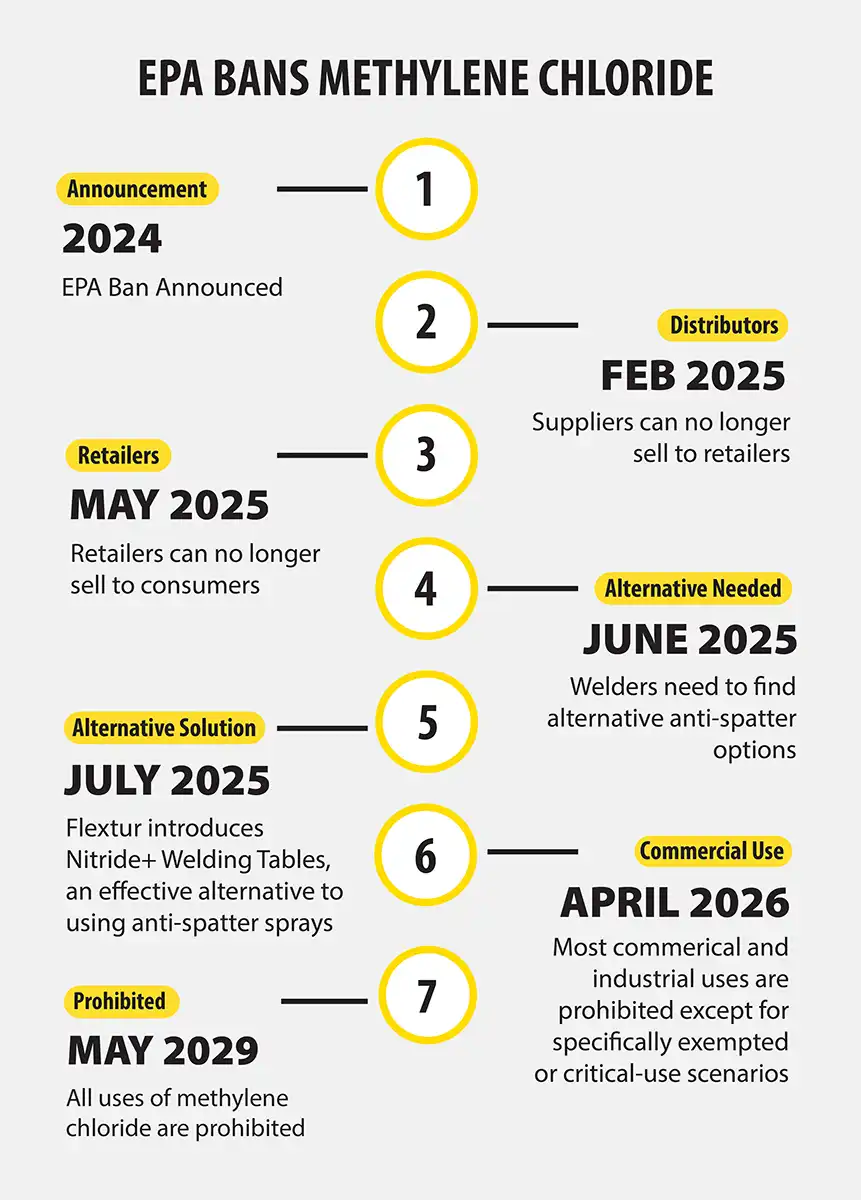
EPA Bans Methylene Chloride: Why Nitride+ Welding Tables are the Smart Alternative
The welding industry is changing.
In 2024, the U.S. Environmental Protection Agency (EPA) finalized a ban on methylene chloride, a chemical commonly used in anti-spatter sprays. As a result, welding shops are being pushed to rethink how they protect welding tables without relying on hazardous chemicals.
What is Methylene Chloride?
Methylene chloride (also known as dichloromethane) is a solvent historically used in anti‑spatter sprays and industrial cleaners.
Why Was Methylene Chloride Banned?
Methylene chloride exposure has been linked to severe health effects when inhaled or absorbed through the skin, especially in poorly ventilated environments. The EPA’s intent of phasing out these sprays was to prioritize worker safety.
Impact on Welding Shops
Without methylene chloride‑based anti‑spatter sprays, shops may face:
- Increased weld spatter buildup on tables and fixtures
- More frequent cleaning and maintenance
- Shortened table life or surface damage
- Inconsistent weld surfaces caused by uneven buildup
A Process‑Based Alternative to Anti‑Spatter Sprays
One way welding shops are adapting to the methylene chloride ban is by eliminating the need for chemical anti‑spatter sprays altogether.
Instead of relying on coatings or sprays, some tables use surface treatment to reduce spatter buildup at the source.
Nitriding is a heat‑treatment process that hardens the surface of steel, making it more resistant to impact, wear, and corrosion. When combined with black oxide, the treated surface reduces spatter adhesion—allowing weld spatter to break free and wipe away more easily without damaging the table.
This approach offers several practical benefits for welding environments:
- Less spatter sticking to the work surface
- Reduced cleaning and maintenance time
- Improved surface durability without chemical coatings
- Protection that extends into hard‑to‑clean areas, including table holes
Flextur’s Nitride+ welding tables apply this dual‑layer surface treatment across the entire tabletop, helping shops maintain flat, consistent welding surfaces while reducing reliance on hazardous chemicals.
Why Welding Shops Are Moving Away from Anti‑Spatter Sprays
The methylene chloride ban isn’t just a hurdle to overcome; it’s an opportunity to improve your shop.
- Reduce reliance on hazardous chemicals
- Improve worker safety and compliance
- Spend less time cleaning and resurfacing tables
- Maintain flat, consistent work surfaces
As welding shops adjust to the methylene chloride ban, table selection becomes more important, especially for durability, flatness, and long‑term workflow. Understanding the engineering considerations when selecting a welding table for automation and precision work can help teams make safer, future‑ready decisions.
Prepare Your Shop Today
Don’t waste time finding an alternative solution, invest in a table that will save you time and money.